Pīwari the Kaitiaki - English - CYW296
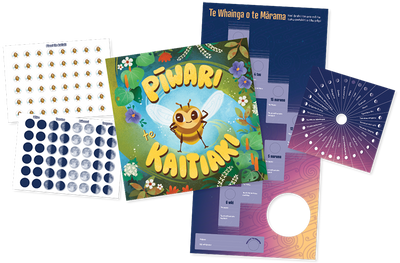
The full resource:
Kia ora! Ko Pīwari ahau, Pīwari the kaitiaki.
I’m going to tell you a pakiwaitara about hauora, mātauranga and immunisations.
We’ll go on a journey through the māra and the ngahere where we’ll meet a wise kuia who will teach us about immunisations and how they support our hauora.
Are you ready? Let’s go!
One day, Whaea Mere, a wise wahine, gathered tamariki in the māra to share a story.
"Our people have always lived as one with te taiao. Our mātauranga comes from nature and from tohu all around us."
Whaea Mere pointed to a putiputi where a bee had landed.
“Bees are a koha from our Atua to help our environment and our hauora,” she explained.
“Long ago our tīpuna knew bees did something special.“
“Bees and their friends flew pollen from one putiputi to another, helping the ngahere to flourish. Our tīpuna would use putiputi and other plants to make rongoā and help keep whānau safe.“
“Today, we also use immunisations to support our hauora.”
Curious little asked, “How do immunisations work, Whaea Mere?“
The tamariki listened closely as Whaea Mere continued.
“When you get immunised, your tinana learns how to protect you from getting sick.”
“Immunisations are like a little kākano planted in your tinana. The kākano helps
your tinana learn how to recognise bugs and diseases and fight them so you are
less likely to get sick.”
“Our pēpi are precious taonga. Just like putiputi, we need to nurture them so they grow up strong and healthy.”
After listening to Whaea Mere’s kōrero, the tamariki knew that they could rely on different
kinds of medicine, old and new, to protect them and their whānau.
Poipoia te kākano, kia puāwai.
Nurture the seed and it will blossom.
Ngā kupu Māori
Atua - God(s)
Hauora - Health and wellbeing
Hui - Meeting or appointment
Ingoa - Name
Iwi / hapū - Tribe / subtribe
Kaitiaki - Guardian
Kākano - Seed
Kia ora - Hello
Ko Pīwari ahau - I’m Pīwari
Koha - Gift or give
Kōrero - Talk
Kuia - Female elder
Māra - Garden
Mātauranga - Knowledge
Maumahara - Memories
Ngahere - Forest or bush
Pakiwaitara - Story
Pepehā - Personal introduction
Pēpi - Baby
Pukapuka - Book
Putiputi - Flower
Rā whānau - Birthday
Rongoā - Traditional Māori medicine
Tākuta - Doctor
Tamariki - Children
Taonga - Treasure
Te taiao - The natural environment
Tinana - Body
Tīpuna - Ancestors
Tohu - Sign
Wahine - Woman
Whaea - Auntie
Whānau - Family